A Historic El Niño Is Headed Our Way
Here’s how to prepare for winter storm season.

written by
Kirsten Delva
October 19, 2026

Winter storm season in the US typically runs from late fall through early spring, and this year NOAA's Climate Prediction Center is watching something unusual: a potentially historic El Niño event taking shape in the Pacific, one that could rank among the strongest ever recorded. That's not a reason to panic, but it is a reason to pay attention. The storm tracks that shape ice, snow, and flooding risk across the country shift when an El Niño this strong sets in. Here's what's happening in the Pacific, and what it could mean for this winter.
Past Niños and What This Year Could Look Like
El Niño is a periodic warming of the tropical Pacific Ocean that reshapes storm tracks and temperatures worldwide, and this one is intensifying fast.
The strongest El Niños on record reshaped entire winters:
- 2015-16: Niño 3.4 peaked around 2.75 degrees C, a near-record high
- 1982-83: The Relative Oceanic Niño Index peaked around 2.69 degrees C
- 1997-98: The so-called "Godzilla" El Niño, one of the most disruptive winters in modern US history
This year's event is tracking toward that same company.
NOAA's Climate Prediction Center says El Niño is strengthening fast: as of its August 2026 outlook, there's a greater than 90% chance of a very strong El Niño this fall and winter, and a 69% chance it becomes one of the strongest on record. That matters because strong El Niño winters typically push the storm track south, putting the Gulf Coast, Southeast, and southern Plains, not just the usual snow belt, in the path of more frequent storms.
What to Expect in Your Region
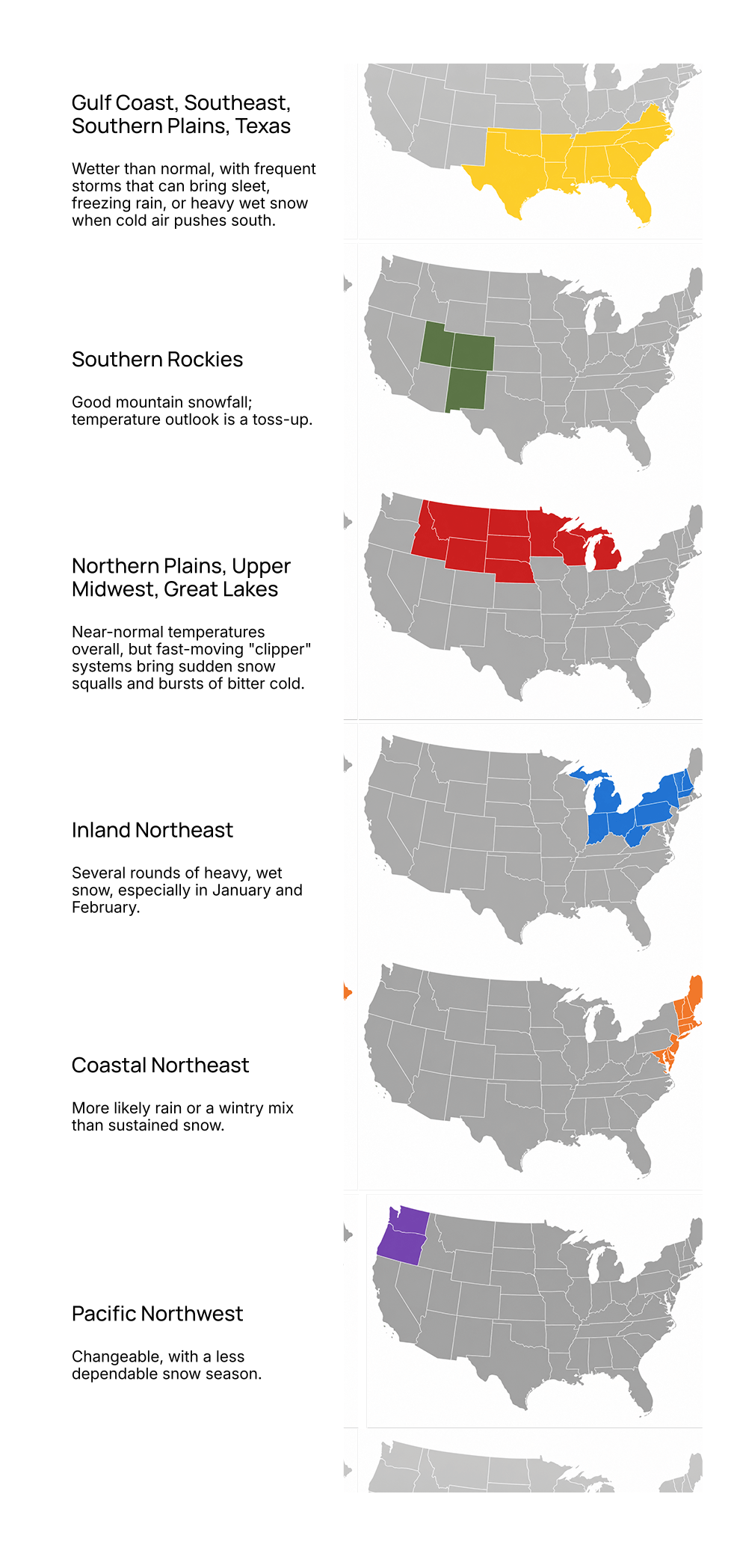
Farmers' Almanac's 2026-2027 forecast lines up with that pattern, describing the season as "snow, sleet, and surprises" rather than uniformly mild or severe.
Winter Storm Preparedness Checklist
Preparedness comes down to one assumption: the power could go out, roads could become impassable, and help could be delayed for several days. Cover the basics below before the first storm watch is issued, not after.
Here is a checklist to go over before storm season starts:
Home and Power Outage
☐ Test smoke and carbon monoxide detectors, and keep a battery- powered CO alarm on hand, CO poisoning kills people every winter storm, often from generators or stoves used improperly for heat
☐ Know how to shut off water at the main, and let faucets drip during extreme cold to prevent frozen pipes
☐ Insulate pipes in unheated spaces like garages and crawl spaces
☐ Keep a battery- or crank-powered radio, flashlights, and backup batteries or a power bank on hand
☐ If using a generator, run it outside only, at least 20 feet from windows and doors
Vehicle and Travel
☐ Keep the gas tank at least half full throughout storm season
☐ Pack a winter car kit: blankets, extra warm clothes, snacks, water, a phone charger, jumper cables, a small shovel, and sand or kitty litter for traction
☐ Check wiper blades, antifreeze, and tire tread before the first cold snap
☐ Avoid travel during storm warnings; if stranded, stay with the vehicle and run the engine periodically for heat
Food, Water, and Warmth
☐ Stock at least 3-7 days of non-perishable food and water per person
☐ Keep extra blankets, warm layers, and a backup heat source that doesn't rely on electricity
☐ Freeze jugs of water ahead of a storm, they help keep a fridge or cooler cold during an outage and double as emergency drinking water once melted
Health, Medication, and Emergency Supplies
☐ Fill prescriptions before a storm watch is issued, pharmacies can close for days when roads are impassable
☐ Keep a basic first aid kit stocked and easy to find
☐ If anyone in the household depends on refrigerated medication or powered medical equipment, plan ahead for backup power or a safe place to go
☐ Build (or restock) an emergency medication kit before the season starts, not after the forecast turns urgent
Download the printable PDF here: Download
The Takeaway
Winter storms don't wait for a perfect forecast, and this year's unusually strong El Niño adds a wrinkle: more storm energy over the South, a complicated pattern in the Northeast, and still no guarantee against a sudden Arctic blast anywhere in between. The households that come through a multi-day outage or an ice storm the easiest are usually the ones who did the boring work in October, not December.
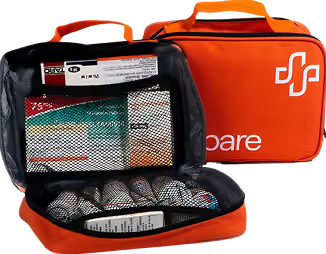
That includes something people tend to put off until the last minute: having a few days of medication, basic first aid, and emergency supplies already on hand, so a closed pharmacy or an impassable road doesn't turn into a medical emergency on top of a weather one.
Sources
• NOAA Climate Prediction Center, ENSO discussion, August 2026
• OpenSnow: NOAA's 2026-2027 Winter Forecast
• Farmers' Almanac 2026-2027 Winter Weather Forecast
• History.com: Great Blizzard of 1888
• National Weather Service: Storm of the Century, March 1993
• WJLA: Snowmageddon 13th anniversary
• Texas Comptroller: Winter Storm Impact
• WHEC: Buffalo-area storm death toll
Prepare Medical keeps medications in your house when you need them most.

Disclaimer: All prescriptions are subject to physician review and approval. Medications are dispensed only through licensed Canadian pharmacies in compliance with Health Canada regulations. Telehealth access is included as part of your program and is not intended as a substitute for emergency medical services. Always seek immediate care in life-threatening situations.