Hurricane Isaias: What Hit the Gulf Coast and How to Be Ready for the Next One
Including tips for your prep kit
.png)
written by
Jordan Hanson
October 14, 2026
.png)

Six years after the first Hurricane Isaias swept up the East Coast, the name is back, and so is the danger. A new Hurricane Isaias formed in the Gulf of Mexico on October 7, 2026, the Atlantic's first hurricane of an unusually quiet season, and then slammed into the Florida Panhandle as a Category 2 just two days later. Here's what happened, and the survival lessons every household in its path should take from it.
What Happened Last Week
Isaias formed in the Gulf of Mexico on October 7 with winds of just 45 mph. Warm Gulf waters and low wind shear fueled rapid intensification, and by the night of October 9 it made landfall near Destin, Florida, as a Category 2 hurricane with 105 mph sustained winds and gusts up to 116 mph. It arrived roughly two hours before peak high tide, which helped keep storm surge to around 5 feet instead of the 6 to 9 feet forecasters had warned was possible.
.png)
The storm weakened quickly once inland, dropping to a post-tropical system within hours, but it kept moving: bands of severe weather pushed through Alabama and Georgia, with tornado warnings reaching as far as North Carolina and heavy rain soaking Virginia and the East Coast days later.
The Toll it Left Behind
At least four people died. One Escambia County resident passed away due to carbon monoxide poisoning after running a generator indoors, a reminder that a storm's most dangerous moments often come after the wind dies down, not during it.
More than 900,000 customers across Florida, Alabama, and Georgia lost power, with over 80% of residents in some Florida Panhandle counties in the dark. In Pensacola, wind tore the roof off a gas station and dropped it onto parked cars; in Destin, a boathouse collapsed. Florida declared a state of emergency across 27 counties, Alabama in 40, and Georgia issued one statewide.
Hurricane Survival Tips
Before the storm:
- Build a kit that covers at least 3 days: one gallon of water per person per day, non-perishable food, a flashlight, batteries, and a battery-powered or hand-crank radio.
- Refill prescription medications well ahead of time: pharmacies are often closed or inaccessible for days after landfall.
- Know your evacuation zone and follow evacuation orders immediately.
- Print key documents (insurance info, emergency contacts, medical records), since power and internet outages can cut off digital access.
- Make a plan for pets and for family members with mobility or medical needs.
During the storm:
- Stay inside, away from windows, in the most interior part of your home.
- Don't go outside to check on damage until officials confirm it's safe
After the storm:
- Never run a generator indoors or in an enclosed space. Keep it outdoors, at least 20 feet from any door, window, or vent. Carbon monoxide poisoning is one of the most preventable storm deaths.
- Avoid floodwater; it can hide debris, contamination, or live electrical lines.
- Check in on neighbors, especially elderly or medically vulnerable ones.
Don't Let Medication Be the Gap in Your Plan
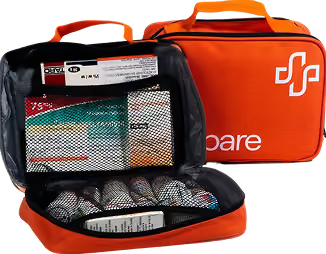
Isaias is a fresh reminder that it doesn't take a Category 5 to upend a region. A storm can intensify in two days, knock out power to nearly a million people, and leave pharmacies closed for a week. An emergency kit means the medications you'd need for a storm-related injury or illness are already on hand before the forecast ever turns toward you, so a power outage or a flooded road doesn't turn into a medical emergency.
Prepare Medical keeps medications in your house when you need them most.

Disclaimer: All prescriptions are subject to physician review and approval. Medications are dispensed only through licensed Canadian pharmacies in compliance with Health Canada regulations. Telehealth access is included as part of your program and is not intended as a substitute for emergency medical services. Always seek immediate care in life-threatening situations.